| shawnhar Astrophotography |
~ My Pics ~
- Galaxies
- Nebula
- Constellations
- Planetary
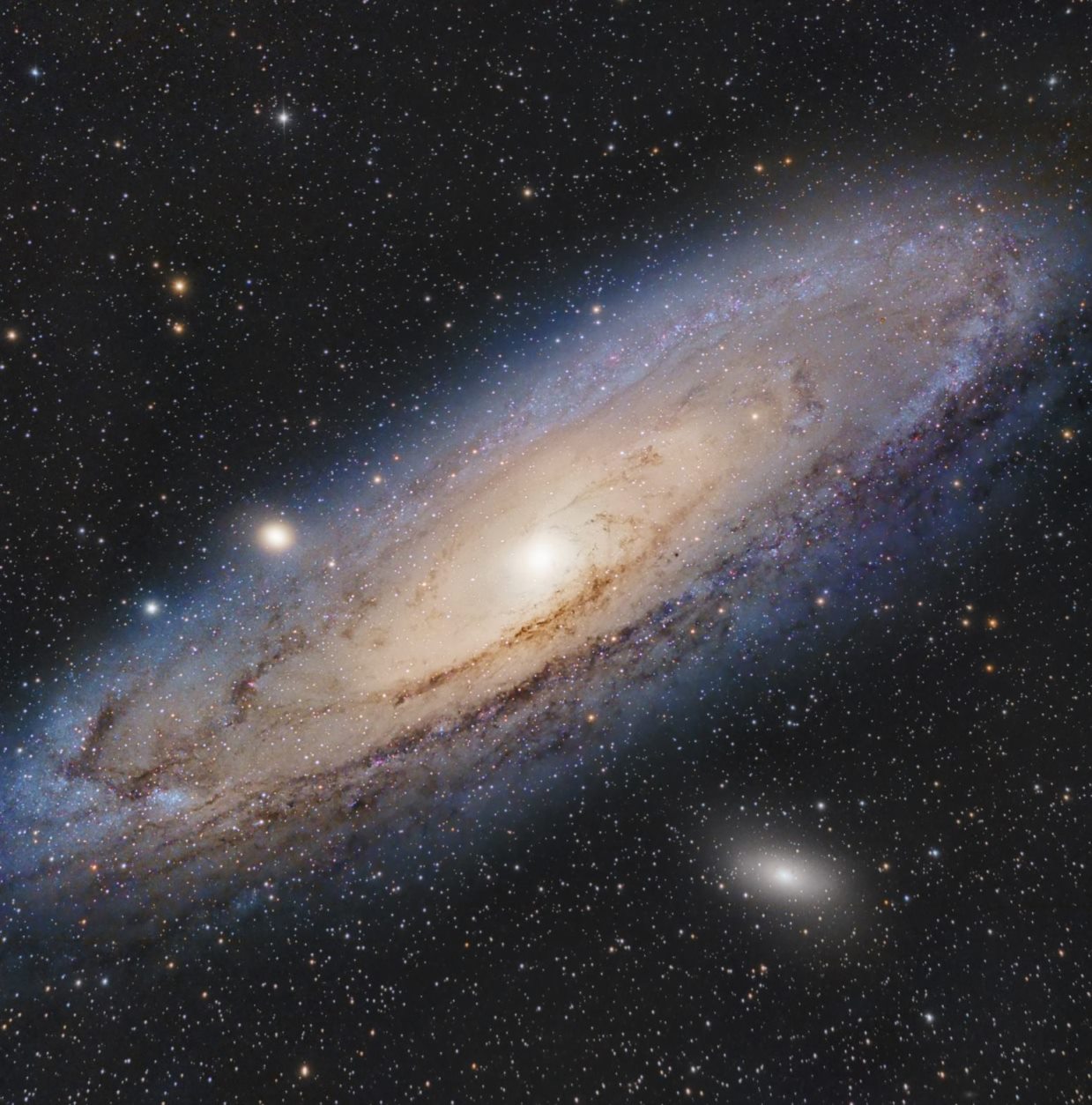
| The Andromeda Galaxy,
also known as Messier
31 or M31, is one of the few galaxies visible to the naked
eye. It was previously known as the Great Andromeda "Nebula", until
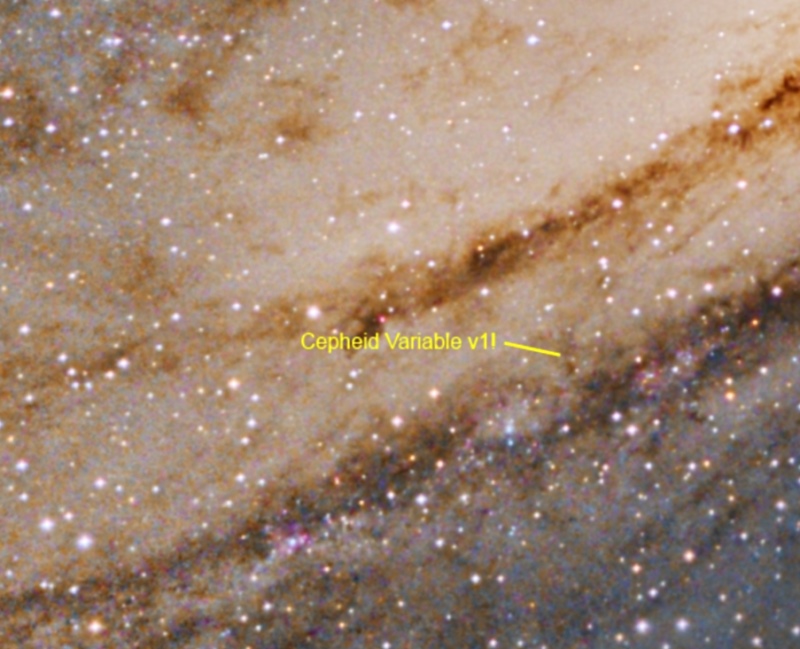
October 1923, when Edwin Hubble, using the 100 inch Hooker
telescope at Mount Wilson Observatory, observed the very
1st Cepheid variable star outside our own galaxy, proving M31
was actually a separate galaxy from our own. The story and pictures
of the actual plates he used to do this can be found here: http://obs.carnegiescience.edu/PAST/m31var Taken 09/16/2015 Scope: Meade SN6 Camera: QHY8 Color CCD Mount: EQ6 pro (Same as Orion Atlas) Guiding: PHD2 with OAG and Meade DSI color 14x1200 seconds exposure, no filters 4.7 hours total integration Stacked and processed in Pixinsight and tweaked in Photoshop 2 panel mosaic created with David Ault's tutoral on Gradient Merge Mosaic Full resolution: Here |
  |
| The
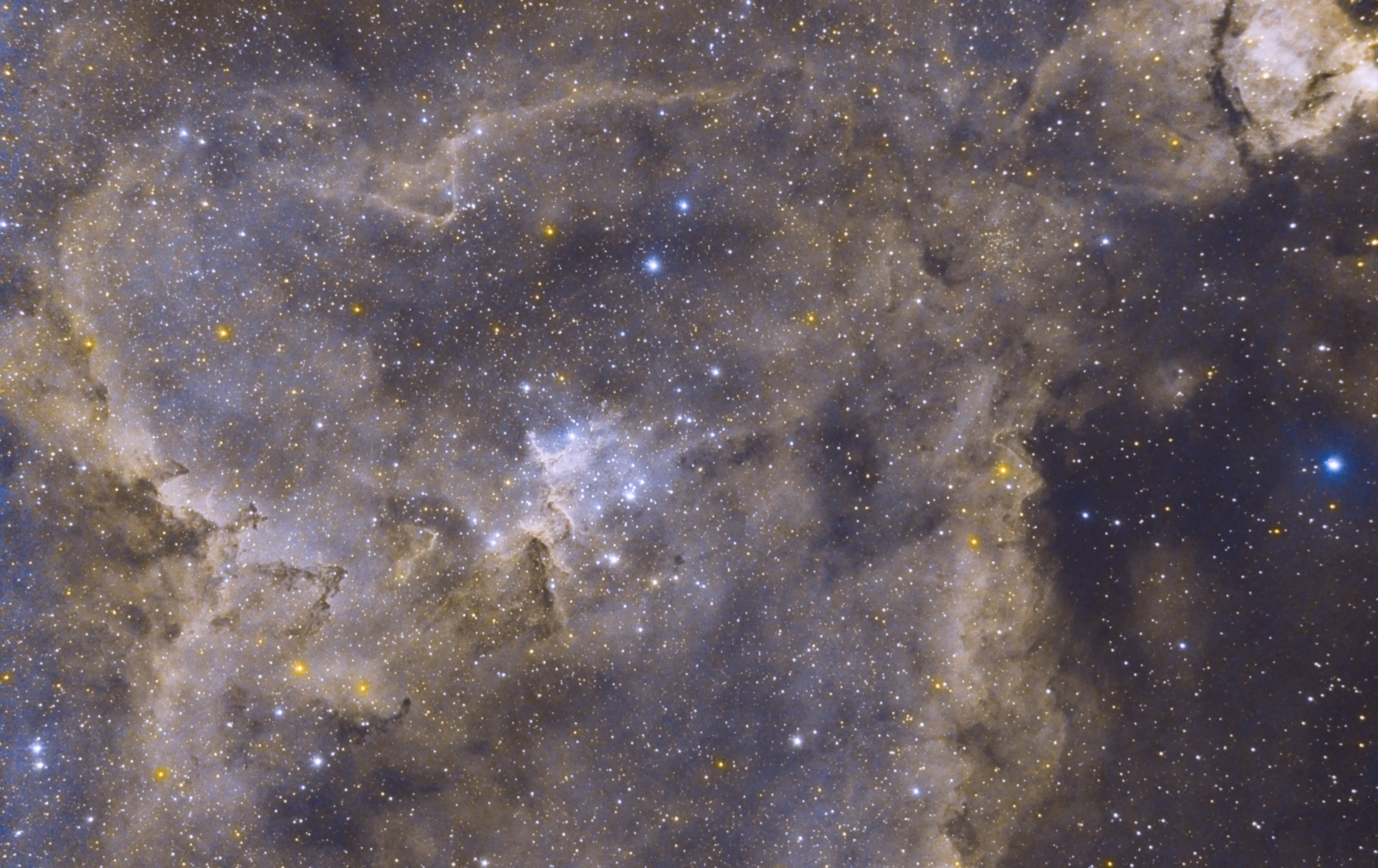
Heart Nebula, also known as IC
1805, Also known as Sharpless
2-190 in the constellation Cassiopeia, the entire nebula is a result of
the intense stellar winds from the bright cluster at it's center
(Melotte 15) generating ionized hydrogen plasma. Just to the right of
the center structure, and not resolved in my picture, Is a giant white
dwarf binary system newly discovered in 2015 and spiraling into one
another to go supernova in 700 million years, the bright part
in the
upper right is NGC 896, the brightest and 1st part of this nebula to be
discovered. Taken over 6 nights between 10/14/2015 and 10/23/2015 Scope: Meade SN6 Camera: QHY8 Color CCD Mount: EQ6 pro (Same as Orion Atlas) Guiding: PHD2 with OAG and Meade DSI color 53x1200 seconds for color 5x3600 seconds for HA with 12nm Astronomiks EOS clip in filter 18.2 hours total integration Stacked in Deep Sky Stacker, Processed in Pixinsight and tweaked in Photoshop Full resolution: Here |
 |
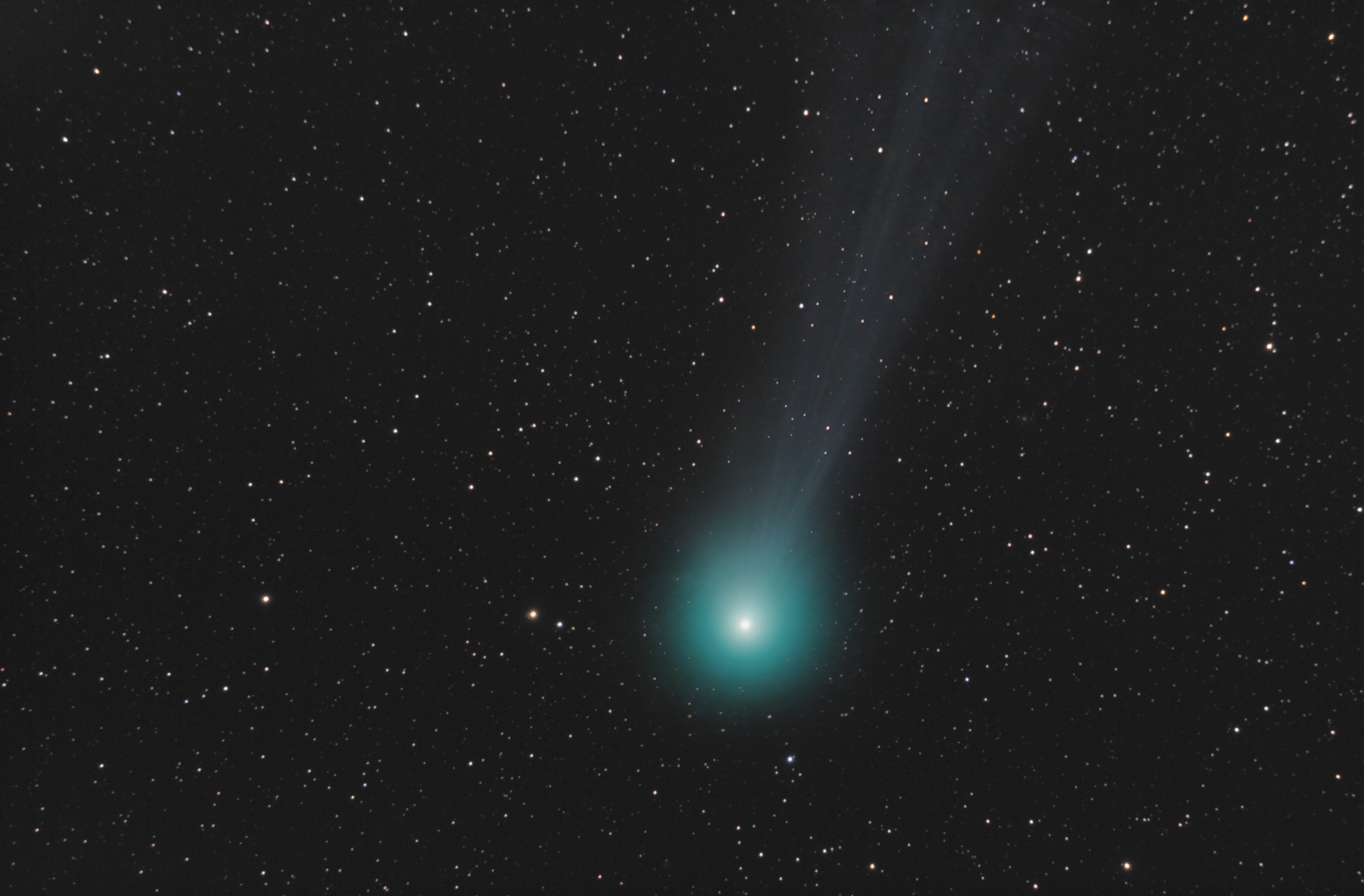
| Comet Lovejoy,
also known
as C/2014 Q2 in the constellation Andromeda, the comet was
around
magnitude 6 when this picture was taken. Lovejoy was a "non-periodic"
comet, meaning it's orbit is either more than 200 years or would not
have made a return trip. It was discovered by an amatuer astronomer
name Terry Lovejoy in August of 2014 using a common 8"
Schmidt–Cassegrain telescope. Terry has actually discovered 5 comets!
https://en.wikipedia.org/wiki/Terry_Lovejoy This means there
are actually 5 comet Lovejoys, how cool is that? Taken 02/07/2015 on the grounds of Tamke-Allen Observatory, operated by Roane State Community College in Rockwood, TN. It was VERY windy that night and I wasn't sure any of my images would be decent, but was pleasantly suprised how good it came out. Most comets are very difficult to process because they move at a different speed than the stars, so you basically have to process twice, once for the stars and once for the comet, then blend those 2 together. Taken 02/07/2015 Scope: Meade SN6 Camera: Baader Modified Canon XS (1000D) DSLR Mount: EQ6 pro (Same as Orion Atlas) Guiding: PHD2 with Orion ST80 and Meade DSI color 41x60 seconds 41 minutes total integration Stacked in Deep Sky Stacker, Processed in Photoshop Full resolution: Here |
 |
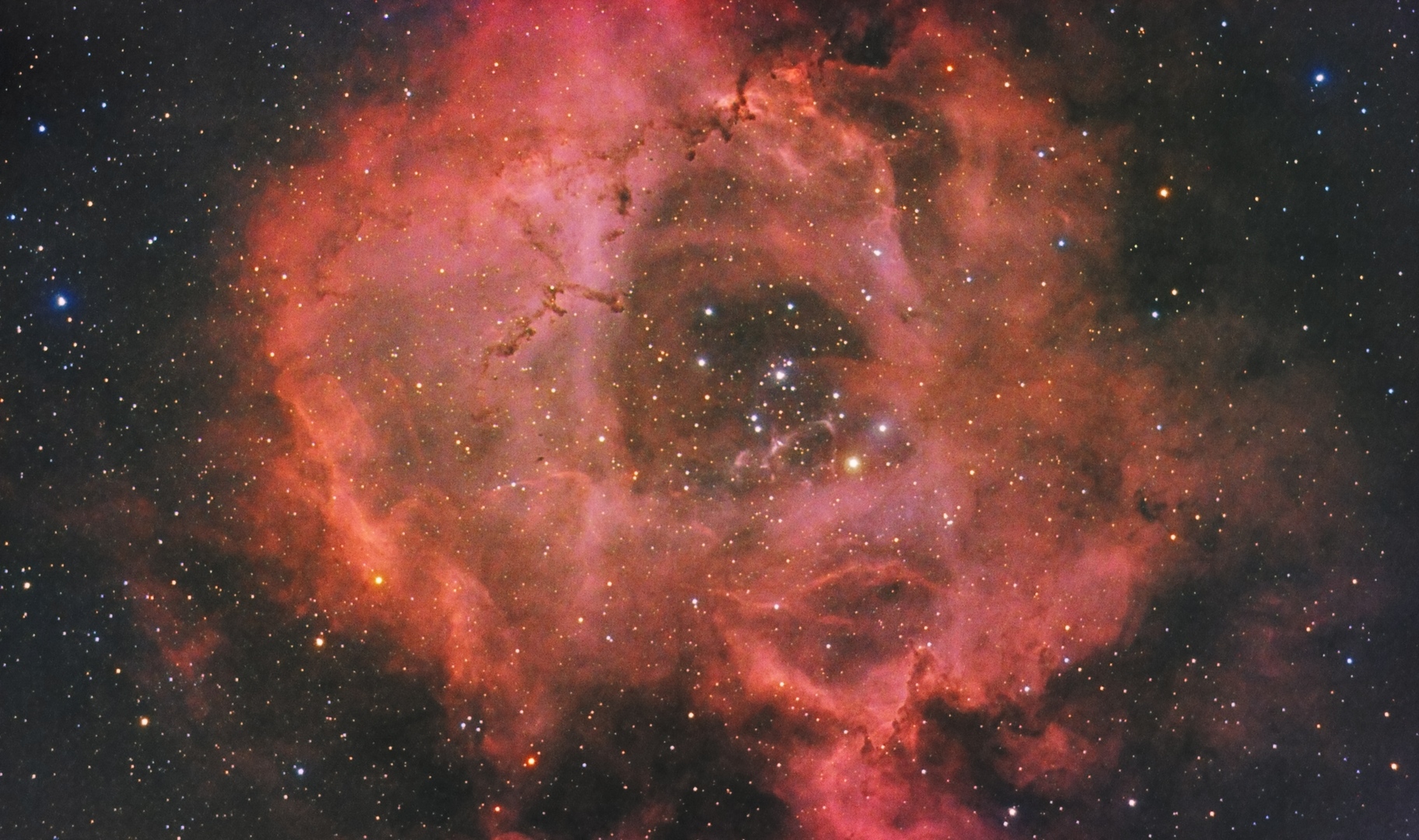
| The Rosette Nebula,
also known as Caldwell 49 is a huge circular cloud (50 light years
across) of partially ionized atomic hydrogen (H2) and the site of
recent star formation. More info
It is about 5,000 light years away in the constellation Monoceros, near Orion. The cluster at the center is NGC 2244 (Caldwell 50) Taken over 3 nights between 03/07/2015 and 03/23/2015 Scope: Meade SN6 Camera: Baader Modified Canon XS (1000D) DSLR Mount: EQ6 pro (Same as Orion Atlas) Guiding: PHD2 with Orion ST80 and Meade DSI color 78x240 seconds for color 10x600 seconds for HA with 12nm Astronomiks EOS clip in filter 7 hours total integration Stacked in Deep Sky Stacker, Processed in Pixinsight LE , Fitswork and Photoshop Full resolution: Here |
 |
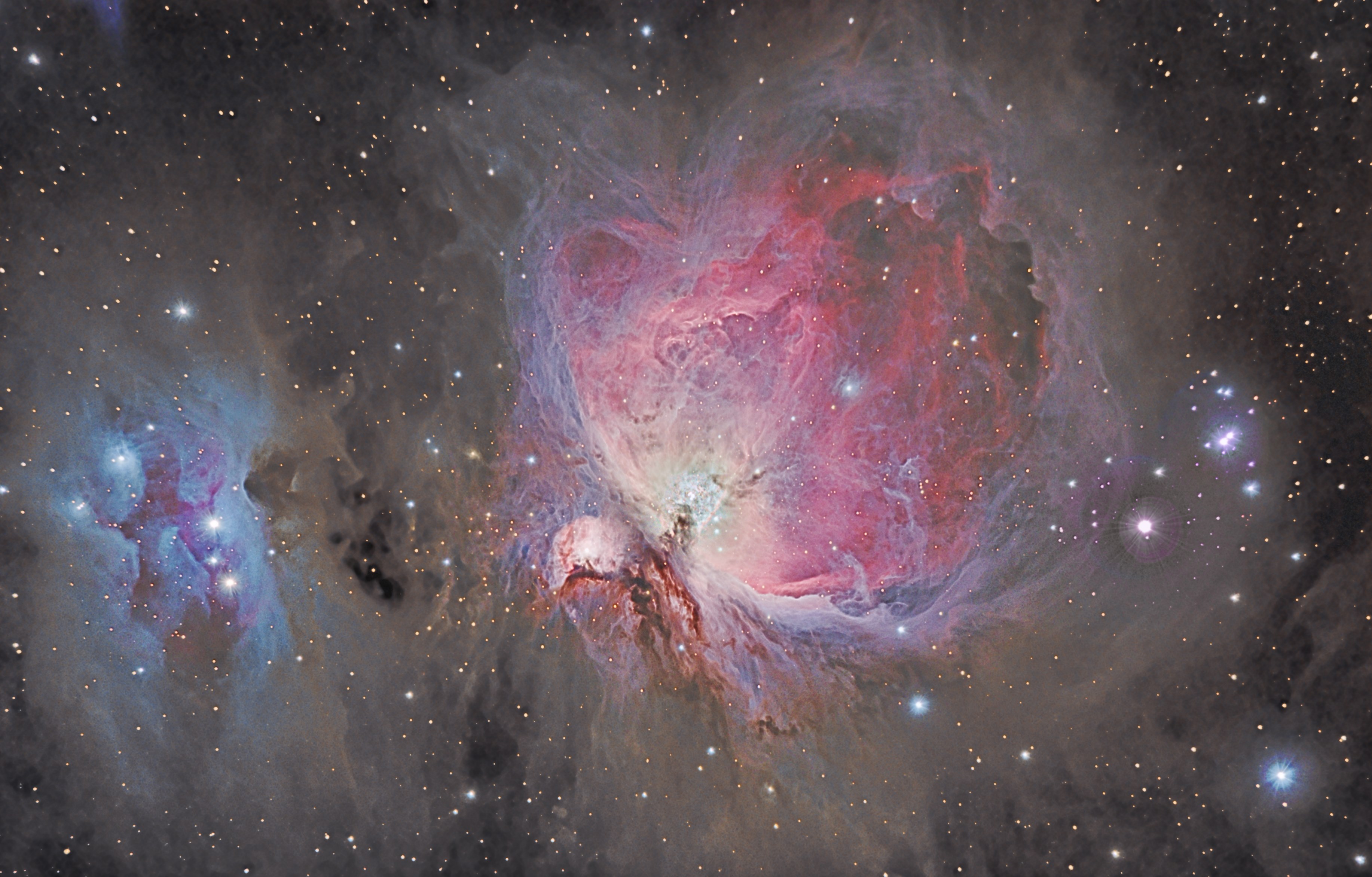
| The Orion Nebula,
also known as M42 and NGC 1976 is a massive star forming region in
Orion, probably the best known and most photographed and visually
observed deep space object in the northern sky. At 1,300 light years
away, this object is so bright it looks like a star to the naked eye.
The "center" star of Orion's sword is actually M42. In 100.000 years,
most of this dust will be blown away and a bright cluster of
newly formed stars will be left, along with the many planets
that
are forming now in what are known as "propylds" and proto-planetary
discs that can be seen in the nebula now. The nebula to the left is The Running Man,
NGC 1973 or Sharpless 279, but I refer to it as "The Gumby Nebula"
and I'm hoping it will catch on. 20 years ago someone's neighbor said
it looked like a "running man" and that caught on, so it's possible if
we try, lol. The Orion Nebula is both very easy to capture because it's so bright, and very difficult to process for the same reason. The core is so much brighter than the dust around it that many pictures are overexposed and pure white in the center, this is what's called "a blown out core", it happens in galaxy pictures too, like Andromeda. The trick is to take 2 sets of exposures, shorter ones for the core and longer ones for the dust, and blend those together so you have detail in the core and can see the surrounding dust. A second way to process is to process the image twice, once for the core and once for the outer dust and blend those together, this is what I have done here. Taken 01/17/2015 Scope: Meade SN6 Camera: Baader Modified Canon XS (1000D) DSLR Mount: EQ6 pro (Same as Orion Atlas) Guiding: PHD2 with Orion ST80 and Meade DSI color 46x300 seconds 3.8 hours total integration Stacked in Deep Sky Stacker, Processed in Pixinsight LE , Fitswork and Photoshop Full resolution: Here |
 |
| The North American
Nebula,
also known as NGC 7000 and Caldwell 20, is a huge emission
nebula 3 times the size of the full moon, 1,600 light years
away
in Cygnus. Composed mostly of neutral hydrogen gas, it is a rich and
popular taget for HA filters. It is believed that one star
is responsible for ionizing all the HA in this and
the
Pelican NebulaAlmost the entire constellation of Cygnus is filled with
clouds of HA gas, lots of dust, and many reflection nebula. This filed of view only shows the bottom half or so of the Nebula, commonly refered to as "The Wall"and the dark region to the right is commonly refered to as "The Gulf". Taken over 5 nights 09/13/2015-09/16/2015 Scope: Meade SN6 Camera: QHY8 Color CCD Mount: EQ6 pro (Same as Orion Atlas) Guiding: PHD2 with OAG and Meade DSI color 60x1200 seconds 8x2400 seconds No filters were used 25 hours total integration Full resolution: Here | 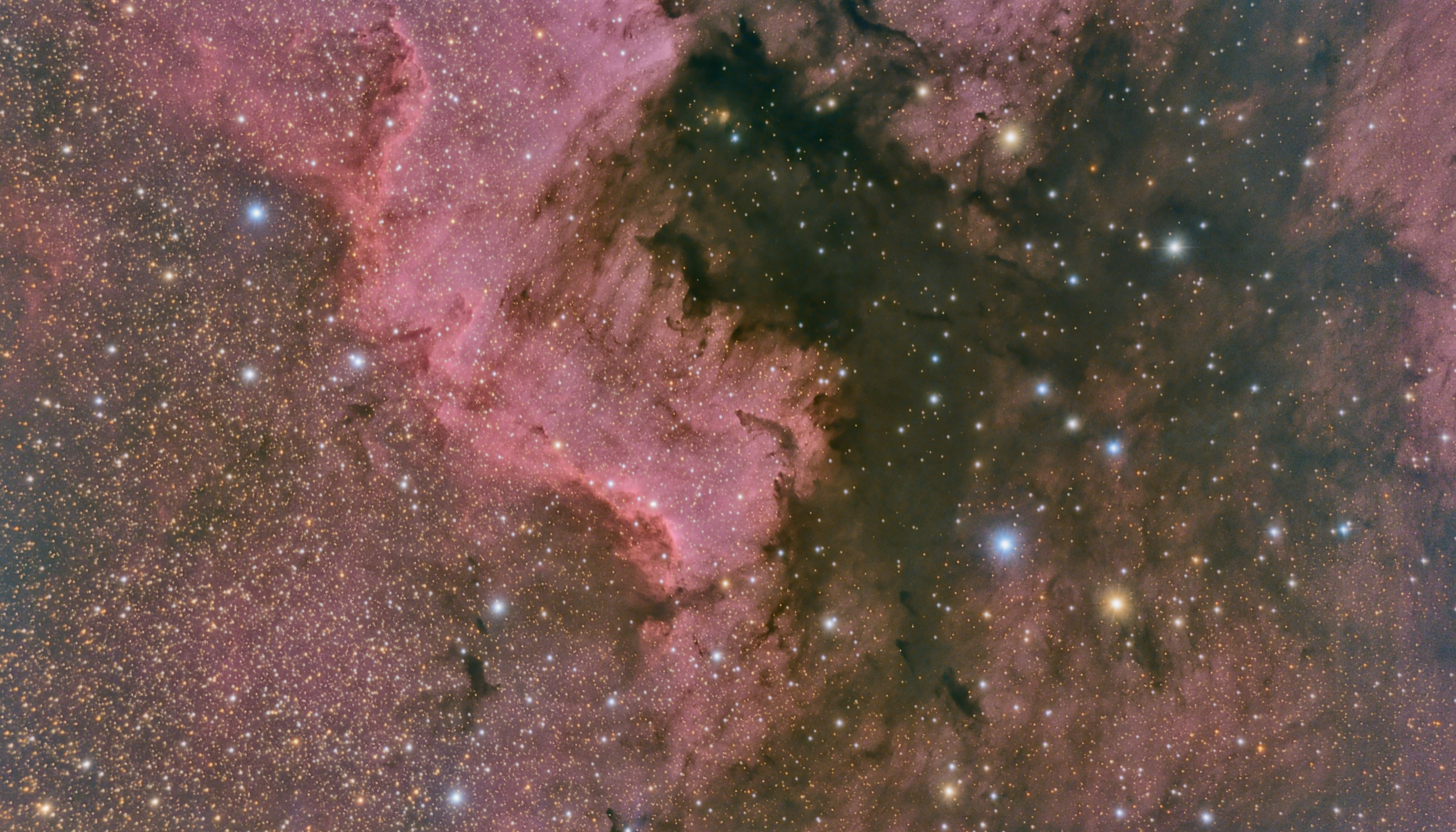 |
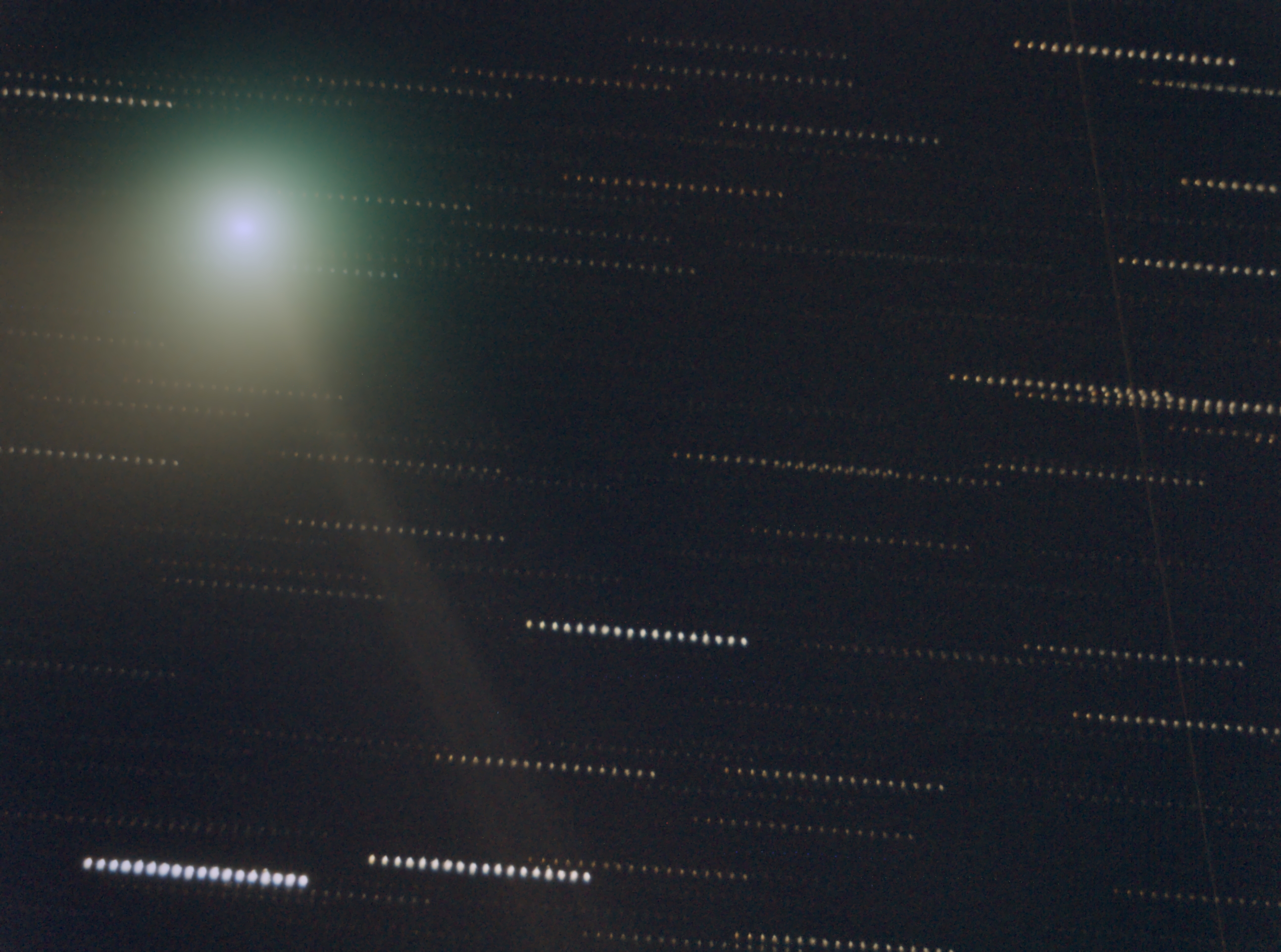
Comet C/2013 US10 (Catalina) Taken Saturday 01/02/2016 at Pickett State Park at the designated Astronomy field just inside the park entrance. Very cold and windy, NOT a relaxing night under the stars, lol. Scope: Meade LX3 10" SCT Focal Reducer: Meade 6.3 Camera: QHY8 Color CCD Mount: EQ6 pro (Same as Orion Atlas) Guiding: PHD2 with ST80 and ASI120MC 18x240 seconds exposure, no filters |
 |
| Crab Nebula - M1 !st light using the ZWO ASI120MC as a guide camera. I was about ready to send this thing back, the drivers suck and there is no way to throttle the thing down so it isn't eating all of your USB bandwidth, so it crashed my computer or crashed APT every time I tried to use it. Finally uninstalled every piece of software, downgraded the firmware in the camera to the "compatibility" version and got it to work. So this is the 1st time I have been able to use the 10" SCT with and off axis guider, the color version is not as sensitive but I was able to find guide stars on all the targets I've picked so far, the old Meade DSIc was just not sensitive enough to find guide stars through the OAG. Taken January 1st, 2016 Scope: Meade LX3 2120 - 10" SCT with 6.3 focal reducer Camera: QHY8 Color CCD Mount: EQ6 pro (Same as Orion Atlas) Guiding: PHD2 with OAG and ASI120MC 5x900 seconds |
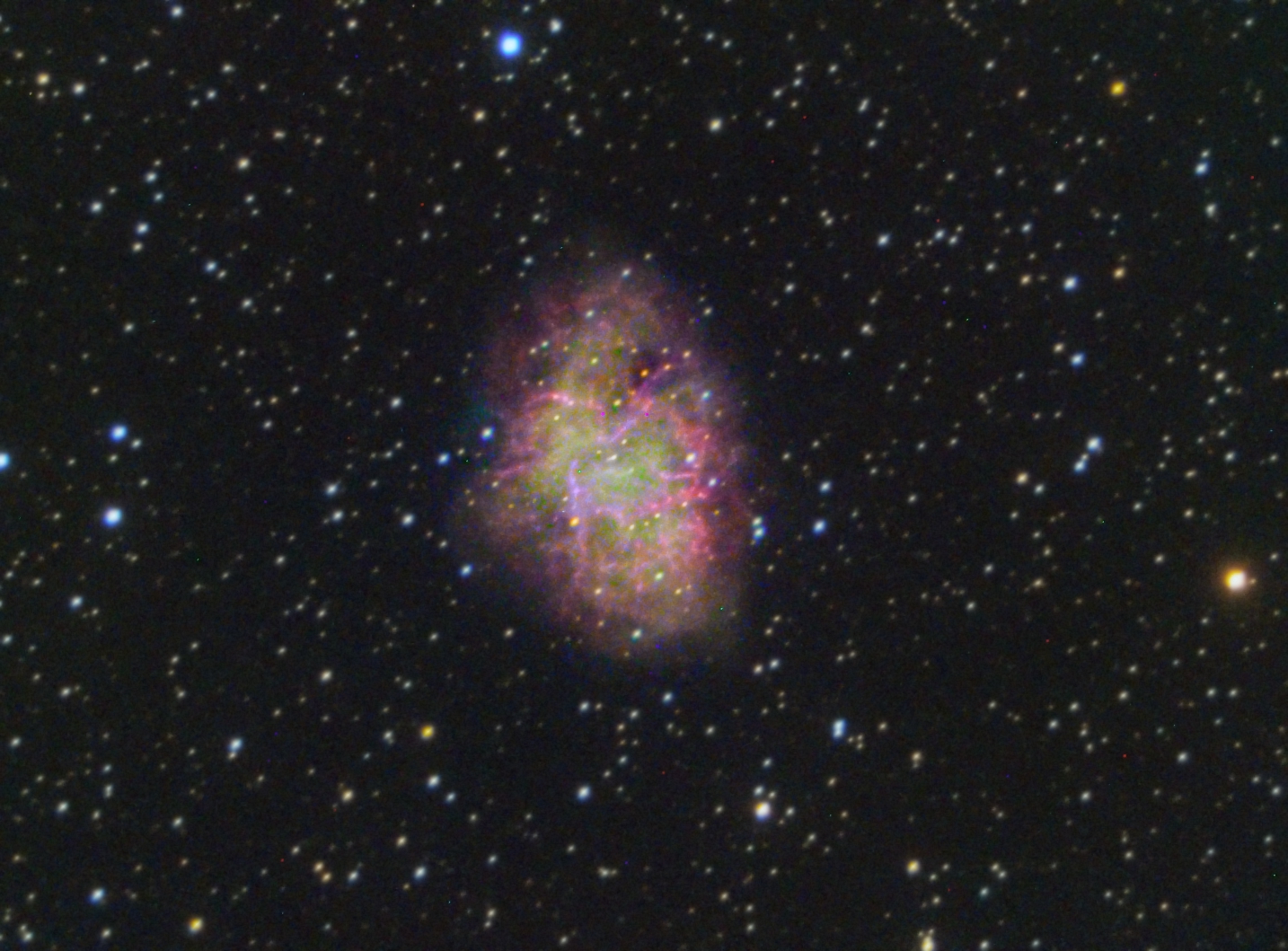 |

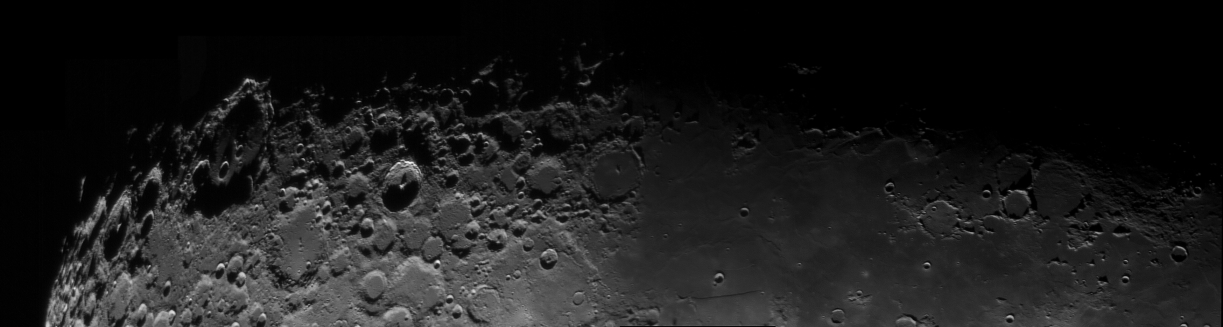
ASI120MC 1st light and testing
| NGC 2264 - The Fox Fur Nebula - The Fox Fur is part of the Cone Nebula complex, and if I had framed it right, I think the Cone Nebula would have just fit in this pic, just to the left. This area is also known as the base of the Christmas Tree Cluster. My main target for the 1st visit to Picket State Park dark sky site on the border of Tennessee and Kentucky in Fentress county. Nice field and even has power so that is a huge plus for astrophotography. Conditions on the other hand were brutal, silly me decided to bring the 10" SCT and there was poor seeing and wind all night, my FWHM is ginormous, oh well, can't win ifyou don't play. I could have done some complicated pixelmath in PI to deal with the halo around that bright star but I'm lazy, lol. Taken January 01/02/2016 Scope: Meade LX3 2120 - 10" SCT with 6.3 focal reducer Camera: QHY8 Color CCD Mount: EQ6 pro (Same as Orion Atlas) Guiding: PHD2 with OAG and ASI120MC 16x900 seconds, roughly 4 hours total exposure, no filters Full Size here | 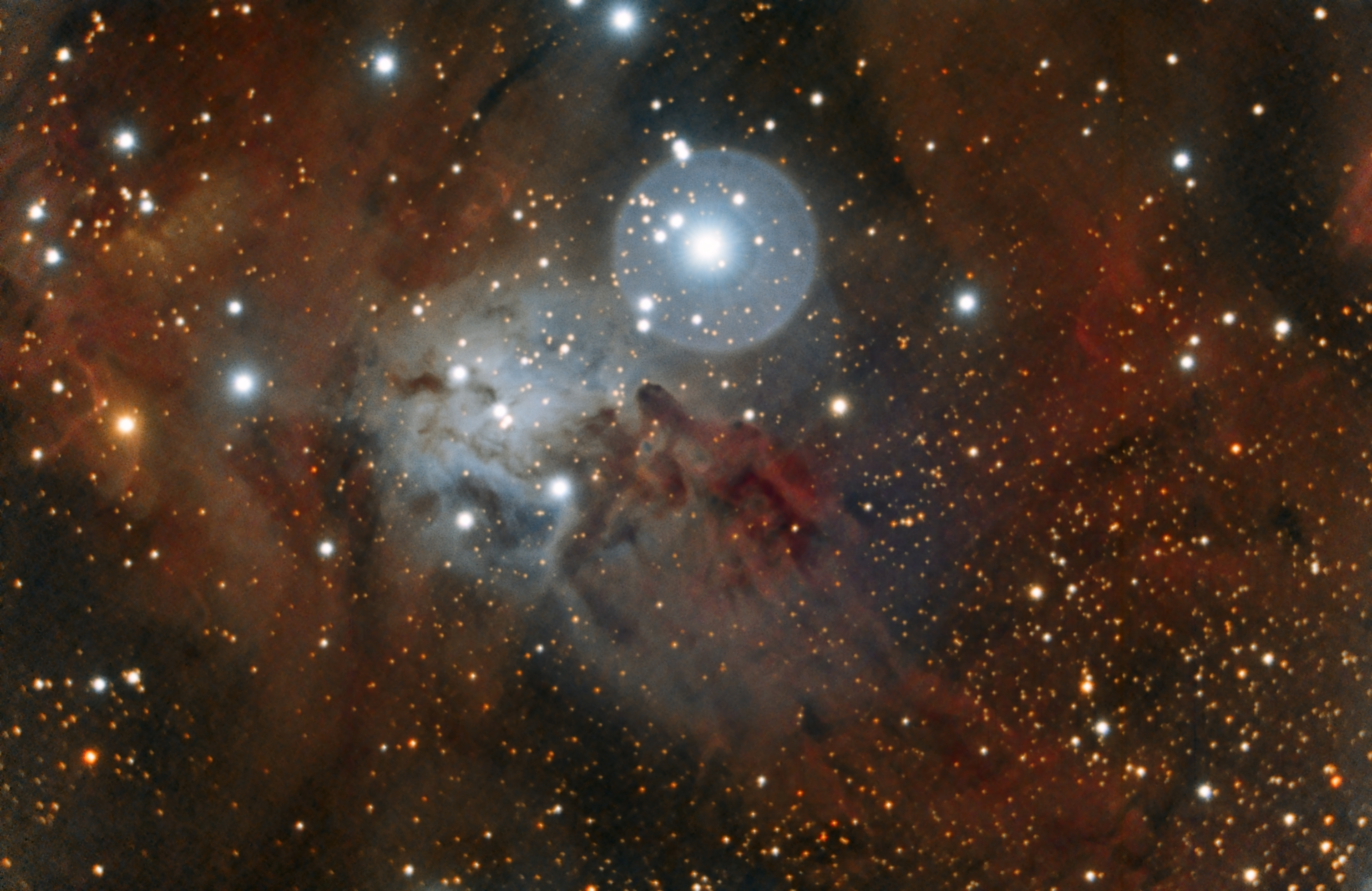 |
| NGC 1977 - Gumby! From Nasa: The 1970s are sometimes ignored by astronomers, like this beautiful grouping of reflection nebulae in Orion - NGC 1977, NGC 1975, and NGC 1973 - usually overlooked in favor of the substantial glow from the nearby stellar nursery better known as the Orion Nebula. Found along Orion's sword just north of the bright Orion Nebula complex, these reflection nebulae are also associated with Orion's giant molecular cloud about 1,500 light-years away, but are dominated by the characteristic blue color of interstellar dust reflecting light from hot young stars. Taken over 2 nights 01/12/16 amd 01/13/16 Scope: Meade LX3 2120 - 10" SCT with 6.3 focal reducer Camera: QHY8 Color CCD Mount: EQ6 pro (Same as Orion Atlas) Guiding: PHD2 with OAG and ASI120MC Orange zone back yard 32x900 seconds and 21x240 seconds, 9.4 hours total exposure, no filters Processed in Pixinsight and Photoshop Full size here | 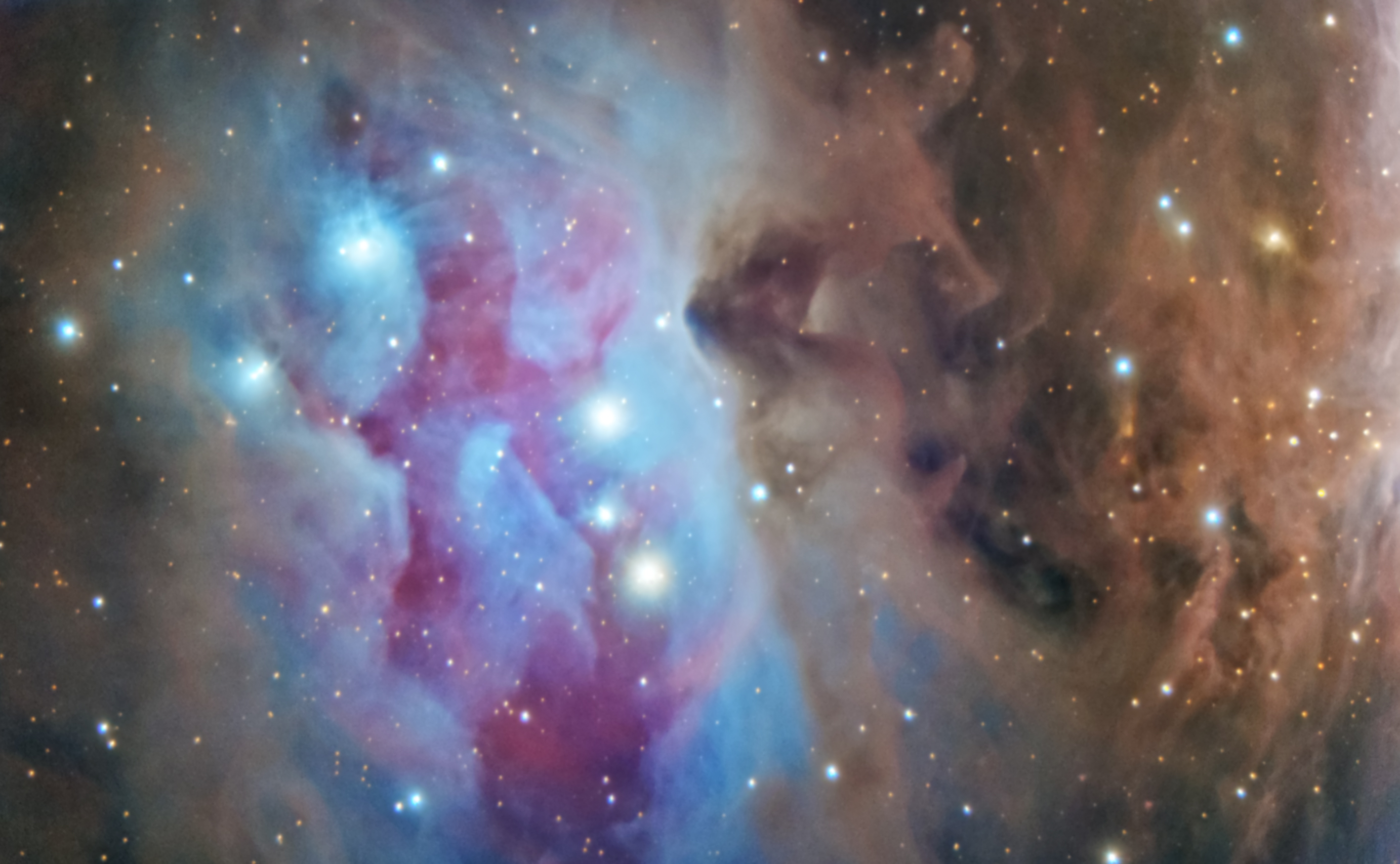 |